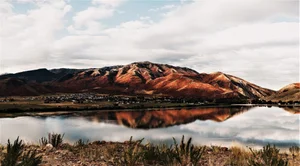
THE ROAD FROM MANTUA TO WILLARD PEAK
The road from Mantua to Willard Peak was born out of a desperate need to save the towns below from catastrophic flooding.
When was it built?
The original road was constructed between 1936 and 1940. While there were likely rough pack trails or minor logging paths used by early settlers and surveyors in the late 1800s, the structured road you drive today was carved out during the Great Depression.
Why was it built?
The primary reason for the road was flood and erosion control, led by the Civilian Conservation Corps (CCC).
1. The "Willard Flood" Crisis: In the early 20th century. The mountains above Willard and Perry were severely overgrazed by sheep and cattle. This stripped the mountainside of vegetation. When heavy rains hit in 1923 and again in 1936, the water had nothing to hold it back. Massive mudslides and "wall-of-water" floods buried parts of Willard in up to 14 feet of debris, killing residents and destroying homes.
2. Terracing the Mountain: To prevent future disasters, the CCC was dispatched to the high basins. To do their work, they needed to get heavy equipment and hundreds of men up the mountain—hence the construction of the road from Mantua.
3. Watershed Restoration: Once the road was in place, the CCC performed a massive engineering feat. They hand-dug and plowed over 700 miles of terraces (which look like giant steps on the mountainside) to catch runoff. They also planted thousands of trees and grasses to stabilize the soil.
4. Secondary Uses: Beyond flood control, the Forest Service used the road for fire management, maintaining livestock fences, and eventually, public recreation.
The "Inspiration Point" changes
In 1948, the road was widened and improved to accommodate the "Jim Bridger Festival," an early local celebration that brought hundreds of people into the basin to see the wildflowers. Over the decades, it transitioned from a rugged utility road into the popular off-roading and sightseeing route it is today.
CCC workers
If you look closely at the slopes around Willard Basin today, you can still see those horizontal "steps" carved into the mountain. They are the 90-year-old fingerprints of the CCC workers who built the road to save their valley.